What Is Bitcoin Halving?

📅 Last updated: February 2026
📋 En bref (TL;DR)
- The halving : event that cuts miners’ reward in half every 210,000 blocks (~4 years)
- Last halving : April 2024 — reward dropped from 6.25 to 3.125 BTC per block
- Next halving : ~April 2028 — reward will drop to 1.5625 BTC
- Price impact : historically +650% to +9,500% in the 12-18 months following (past ≠ future)
- Goal : create programmed scarcity — only 21 million BTC will ever exist, last one mined around 2140

🧠 What Is the Bitcoin Halving?
The word « halving » literally means « dividing by two. » In the Bitcoin world, the halving is a programmed event that cuts in half the reward that miners receive for validating a block.
2x cheaper fees. Up to 6% yield. No seed phrase. Fibo, the wallet you've been waiting for.
Join the waitlist →🔁 Concretely, every 210,000 blocks (approximately every 4 years), the amount of new bitcoins created is cut in half.
This is an automatic rule, written into Bitcoin’s source code since its creation in 2009. No one can stop it, modify it, or accelerate it — not even a government or corporation.
📊 Key figure: Since the April 2024 halving, only ~450 new BTC are created each day (144 blocks × 3.125 BTC), compared to 900 BTC/day before.
🧮 Why Does the Halving Exist?
Satoshi Nakamoto, the anonymous creator of Bitcoin, designed the halving to create a currency that is scarce, predictable, and resistant to inflation.
🎯 The goal: for Bitcoin to be a store of value like gold, not a currency that can be printed at will.
In traditional currencies (euro, dollar), central banks can create money whenever they want. This monetary creation can cause inflation: when there’s too much money in circulation, its value decreases.
With Bitcoin, this is mathematically impossible. The creation of new bitcoins follows a predictable schedule, and the halving is its cornerstone. This makes Bitcoin the first currency with a truly limited supply in history.
💬 Satoshi Nakamoto quote: « The total number of bitcoins in circulation will never exceed 21 million. The distribution of new coins to miners is deliberately similar to gold mining. »
📆 Bitcoin Halving History
Since Bitcoin’s launch in January 2009, four halvings have occurred. Here’s the complete history with market data:
| Halving | Date | Block | Reward | BTC Price (day) |
|---|---|---|---|---|
| Genesis | Jan 3, 2009 | 0 | 50 BTC | ~$0 |
| 1st halving | Nov 28, 2012 | 210,000 | 50 → 25 BTC | ~$12 |
| 2nd halving | Jul 9, 2016 | 420,000 | 25 → 12.5 BTC | ~$650 |
| 3rd halving | May 11, 2020 | 630,000 | 12.5 → 6.25 BTC | ~$8,600 |
| 4th halving | Apr 20, 2024 | 840,000 | 6.25 → 3.125 BTC | ~$64,000 |
| 5th halving | ~April 2028 | 1,050,000 | 3.125 → 1.5625 BTC | ? |
📊 Statistic: In ~15 years (2009-2024), 93.75% of all bitcoins have already been mined. The remaining 6.25% will be created over the next 116 years.
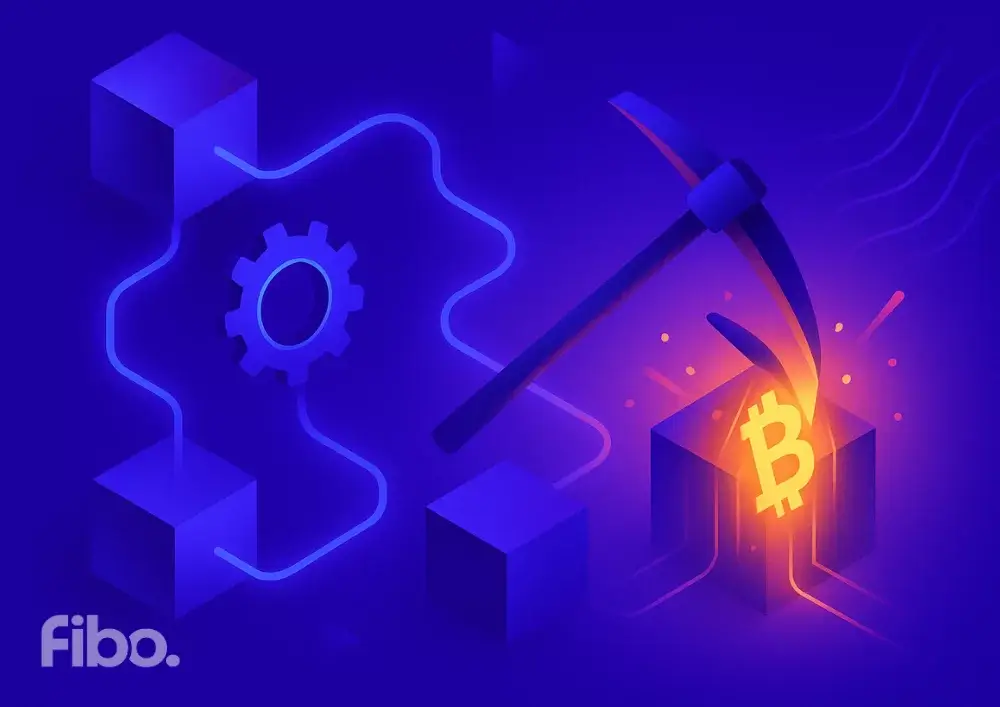
⚙️ How Are New Bitcoins Created?
New bitcoins are generated through a process called mining. Specialized computers (ASICs) validate transactions by solving complex cryptographic calculations. The first miner to find the solution earns the right to:
- Add a new block to the blockchain
- Receive the block reward (currently 3.125 BTC)
- Collect the fees from all transactions included in the block
🧠 Analogy: Like a digital gold prospector — you need expensive equipment, lots of energy, time, and some luck to find the nugget.
With each halving, this reward decreases by half, making new bitcoins increasingly rare and difficult to obtain.
⛏️ Halving Impact on Miners
After each halving, miners receive half as many bitcoins for the same work. This has several major consequences:
- 💸 Profitability pressure: miners must optimize costs (cheaper electricity, more efficient machines) or shut down
- 💰 Growing importance of fees: transaction fees become a larger share of revenue
- 📉 Industry consolidation: small miners disappear, large ones grow larger
- ⚡ Efficiency race: each new ASIC generation must be more performant
📊 Post-2024 halving figures:
- Daily miner revenue: dropped from ~$60M to ~$30M (at constant BTC value)
- Estimated production cost: ~$40,000-50,000 per BTC for efficient miners
- Hash price (revenue per TH/s): -50% immediately after the halving
👉 Despite these challenges, the Bitcoin network has always continued to function after each halving. The hashrate even reached all-time highs in 2025, proving the system’s resilience.
📊 Halving Impact on Bitcoin Price
Historically, halvings have been followed by significant Bitcoin price increases. The economic logic is simple: if supply decreases while demand stays stable or increases, price tends to rise.
| Halving | Price at halving | Following ATH | Gain | Timeframe |
|---|---|---|---|---|
| 2012 | ~$12 | ~$1,150 | +9,500% | 12 months |
| 2016 | ~$650 | ~$20,000 | +3,000% | 17 months |
| 2020 | ~$8,600 | ~$69,000 | +700% | 18 months |
| 2024 | ~$64,000 | ~$108,000 (Jan 2025) | +69% | 9 months |
⚠️ Warning: Past performance does not guarantee future results. Each cycle is different, and other factors (institutional adoption, regulation, macroeconomics) also influence the price. Nevertheless, the halving remains a fundamental event that structurally modifies supply.
📊 Stock-to-Flow Theory: This model, popularized by analyst PlanB, measures scarcity by comparing existing stock (BTC in circulation) to production flow (new BTC created). After each halving, Bitcoin’s S2F ratio doubles, approaching that of gold.

⏳ How Many Halvings Are Left?
Of the 21 million bitcoins that will ever exist, more than 19.6 million are already in circulation (February 2026). Less than 1.4 million BTC remain to be created over the next 114 years.
📊 Upcoming halvings schedule:
- 5th halving (~2028): 3.125 → 1.5625 BTC
- 6th halving (~2032): 1.5625 → 0.78125 BTC
- 7th halving (~2036): 0.78125 → 0.390625 BTC
- … and so on until ~2140
There are approximately 29 halvings remaining before the last satoshi (0.00000001 BTC) is mined around the year 2140.
🔮 What Happens After the Last Bitcoin?
Around 2140, all 21 million bitcoins will have been mined. There will be no new creation. But this doesn’t mean the end of the network — here’s what will change:
- ⛏️ Miners will no longer receive block rewards
- 💰 Their revenue will come entirely from transaction fees
- 🔄 The network will continue functioning normally for transfers
- 📦 Bitcoin will become a system 100% based on existing circulation
Experts believe that by then, transaction fees will be sufficient to compensate miners, thanks to:
- 📦 Ordinals/Inscriptions (NFTs on Bitcoin)
- ⚡ The Lightning Network for fast transactions
- 🧠 Smart contracts via BitVM and other innovations
- 🏦 Massive adoption as a global store of value
💬 Expert quote: « The halving is Bitcoin’s heartbeat — a reminder every four years that this currency is fundamentally different from anything that existed before. » — Lyn Alden, macroeconomic analyst.
💬 Why Is the Halving So Important?
The halving is one of the fundamental elements of Bitcoin’s DNA. It serves several essential functions:
- ✅ Manages supply predictably — schedule known 100+ years in advance
- ✅ Protects against inflation — impossible to « dilute » holders
- ✅ Creates growing scarcity — favors long-term value
- ✅ Reinforces trust — immutable rules no one can change
- ✅ Differentiates Bitcoin — from fiat currencies printed at will
This is what distinguishes Bitcoin from traditional currencies: no one can change the rules at will. Not governments, not central banks, not corporations.
✅ Key Takeaways
| Element | What to remember |
|---|---|
| ✂️ Halving | Reward cut in half every 210,000 blocks (~4 years) |
| 🎯 Goal | Make Bitcoin scarce and inflation-resistant |
| 💰 Current reward | 3.125 BTC per block (since April 2024) |
| 📈 Price impact | Historically bullish, but not guaranteed |
| 🕰 Next halving | ~April 2028 (block 1,050,000) |
| 🔚 Last BTC | Will be mined around 2140 (21M max) |
📚 Glossaire
- Bitcoin : First decentralized cryptocurrency, created in 2009 by Satoshi Nakamoto. Supply limited to 21 million units.
- Halving : Programmed event that cuts miners’ reward in half every 210,000 blocks (~4 years).
- Block : Set of validated transactions, added to the blockchain approximately every 10 minutes by miners.
- Blockchain : Distributed and immutable ledger containing the history of all Bitcoin transactions.
- Mining : Process of validating transactions by solving cryptographic problems, creating new bitcoins.
- Miner : Network participant who validates transactions and secures the blockchain in exchange for rewards.
- Block reward : Newly created bitcoins awarded to the miner who validates a block (3.125 BTC since April 2024).
- ASIC : Specialized machine designed exclusively for Bitcoin mining (Application-Specific Integrated Circuit).
- Hashrate : Total computing power of the Bitcoin network, measured in hashes per second.
- Transaction : Transfer of bitcoins between addresses, permanently recorded on the blockchain.
- Inflation : Loss of purchasing power of a currency due to increased money supply in circulation.
- Limited supply : Bitcoin characteristic where the maximum number is fixed at 21 million units, written in the code.
- Stock-to-Flow : Model measuring an asset’s scarcity by comparing existing stock to new production flow.
- ATH : All-Time High, the highest price ever reached by an asset.
Questions fréquentes
When is the next Bitcoin halving?
The next halving (5th) is expected around April 2028, at block 1,050,000. The exact date depends on block mining time (average 10 min). The reward will drop from 3.125 to 1.5625 BTC per block.
Does Bitcoin price always go up after a halving?
Historically, the price has significantly increased in the 12-18 months following each halving (+700% to +9,500%). However, past performance does not guarantee future results. Other factors (adoption, regulation, global economy) also influence the price.
How many bitcoins have already been mined?
As of February 2026, more than 19.6 million BTC have been mined, representing ~93.5% of the total. Less than 1.4 million BTC remain to be created over the next 114 years.
What happens when all bitcoins are mined?
Around 2140, all 21 million BTC will be in circulation. Miners will no longer receive block rewards but will continue to earn transaction fees. The network will function normally.
Why exactly 21 million bitcoins?
Satoshi Nakamoto chose this number to create a scarce and deflationary currency, similar to gold. This figure results from the formula: 50 BTC × 210,000 blocks × (1 + 1/2 + 1/4 + …) = 21 million.
Can the halving be cancelled or modified?
No. The halving is written into Bitcoin’s source code. To modify it, a majority of the network (miners, nodes, users) would need to accept a protocol change, which will likely never happen as it would destroy trust in Bitcoin.
What's the difference between halving and halvening?
None — they are two terms for the same event. « Halving » is the official technical term, « halvening » is a more informal/humorous version used by the crypto community.
📰 Sources
Cet article s'appuie sur les sources suivantes :
- Bitcoin Whitepaper – Satoshi Nakamoto
- Blockchain.com – Bitcoin Halving Countdown
- CoinMetrics – Bitcoin Supply Data
- Glassnode – On-Chain Analysis
- PlanB – Stock-to-Flow Model
Comment citer cet article : Fibo Crypto. (2026). What Is Bitcoin Halving?. Consulté le 5 février 2026 sur https://fibo-crypto.fr/en/blog/what-is-bitcoin-halving
The simplest way to buy, swap and manage your crypto
Join the first users and get priority access. No seed phrase, fees 3.5x lower, built-in DeFi yield.
Join the waitlist →