Russia: State Duma authorizes cryptocurrency for international trade
📋 En bref (TL;DR)
- Russia’s State Duma voted a landmark bill authorizing cryptocurrency for international trade, with 327 out of 340 votes in favor
- Bitcoin and Ethereum will be the only eligible assets, traded through Bank of Russia-licensed intermediaries
- Stated goal: bypass Western sanctions that cut Russia off from the SWIFT network
- The A7A5 stablecoin, pegged to the ruble, has already surpassed $100 billion in cumulative transactions
- The EU retaliated the next day with its 20th sanctions package banning all crypto transactions with Russian entities
- Effective date: July 1, 2026 for trade; P2P ban coming July 2027
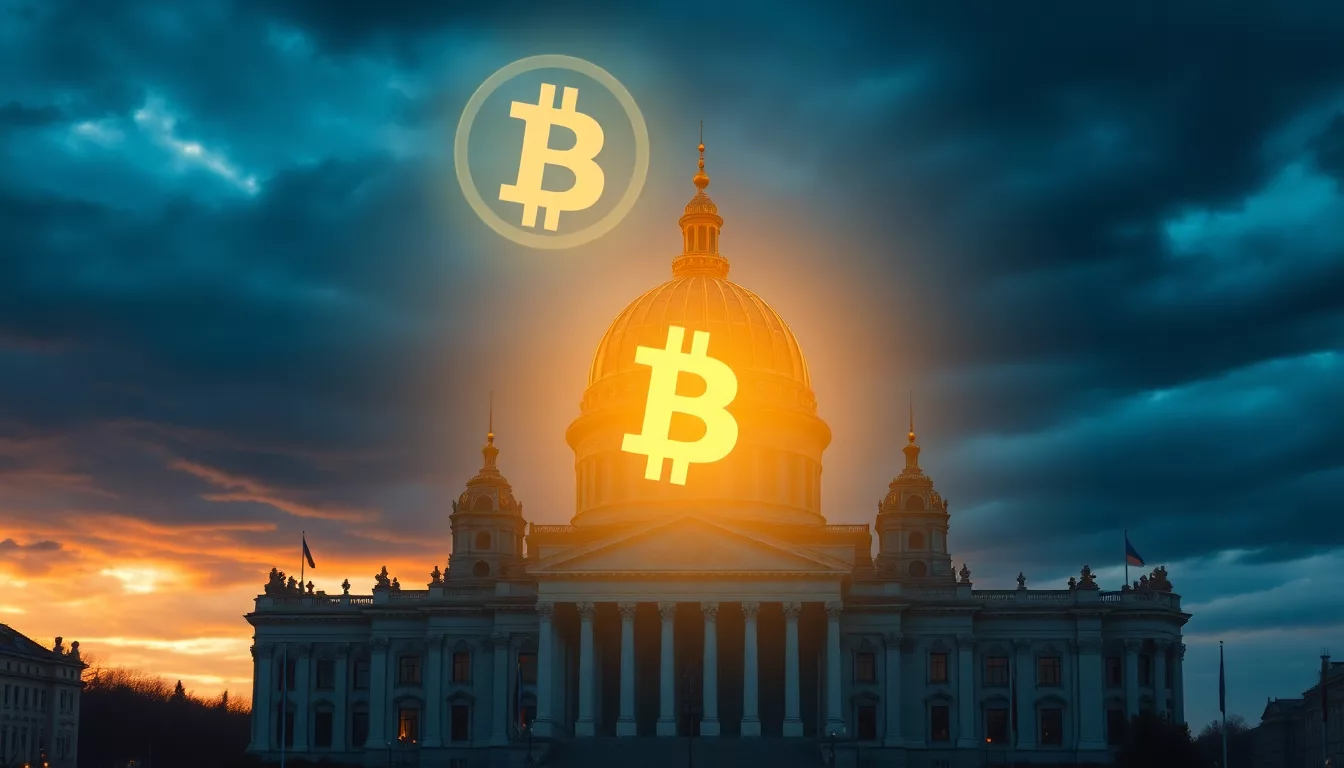
On April 22, 2026, Russia’s State Duma passed a bill in its first reading authorizing cryptocurrency use in international trade. The bill, approved by an overwhelming majority (327 of 340 votes), formalizes what was already happening in the shadows. It creates a legal pathway for Russian companies cut off from the SWIFT network.
The timing was extraordinary. The European Union adopted its 20th sanctions package the very next day, specifically targeting Russia’s crypto sector.
What Russia’s cryptocurrency bill actually allows
Bill No. 1194918-8, titled “On Digital Currency and Digital Rights,” sets a strict framework. Cryptocurrency remains banned as a domestic payment method. The ruble keeps its monopoly within Russian borders.
However, the bill creates an exception for foreign trade. Russian companies will be able to use crypto to settle transactions with international partners. Kaplan Panesh, deputy chairman of the Duma’s Budget Committee, was explicit: “This allows Russian companies to use cryptocurrency to pay foreign counterparties, circumventing sanctions restrictions.”
Only Bitcoin and Ethereum meet the eligibility criteria. The bill requires an average market capitalization above 5 trillion rubles ($66.6 billion) over two years and a minimum daily trading volume of 1 trillion rubles.
Tiered access for retail investors
Non-qualified investors will be capped at 300,000 rubles in annual purchases (approximately $3,800). They must pass a competency test. Professional investors face no volume restrictions. Five categories of licensed intermediaries will operate: exchanges, brokers, management companies, depositories, and currency exchangers.
The Bank of Russia will oversee the entire framework. The effective date is set for July 1, 2026 for licensed platform trading. Peer-to-peer (P2P) transactions without intermediaries will be banned starting July 2027.

The A7A5 stablecoin: $100 billion in transactions in the shadows
This bill doesn’t start from zero. Russia has been using crypto for international trade already. Reuters reported in March 2025 that Russian oil traders were settling transactions with China and India in Bitcoin. Some transactions reached “tens of millions of dollars per month.”
The main tool of this parallel economy has a name: the A7A5 stablecoin. Pegged to the ruble and created by A7 LLC, it surpassed $100 billion in cumulative transactions by January 2026, according to blockchain analytics firm Elliptic. In less than a year, A7A5 captured 43% of the global non-dollar stablecoin market.
Behind A7 LLC are already-sanctioned entities. The company is linked to Ilan Shor, a convicted Moldovan businessman, and Promsvyazbank, a state-owned Russian bank financing the defense sector. The stablecoin was primarily traded for USDT on Grinex, a Kyrgyzstan-based platform and successor to Garantex, which was seized in March 2025.
The European counter-strike: a total sectoral ban
On April 23, 2026 — the day after the Duma vote — the Council of the European Union adopted its 20th sanctions package against Russia. For the first time, the EU imposed a blanket sectoral ban rather than targeting individual platforms.
All crypto service providers established in Russia are now prohibited from transacting with EU persons. The ban takes effect on May 24, 2026. The A7A5 stablecoin, RUBx, the digital ruble (CBDC), and the Belarusian digital ruble are all blacklisted.
The EU justified this shift by pointing to the failure of its previous approach. “Individual platform listings only resulted in the setup of new structures to circumvent those listings,” the regulation states. The digital ruble ban is preemptive: Russia plans its CBDC rollout in September 2026.
A legislative arms race with global implications
The simultaneity of both decisions — Russian vote on April 22, EU sanctions on April 23 — illustrates a crypto arms race between Moscow and Brussels. Russia seeks to institutionalize cryptocurrency as a sanctions-evasion tool. The EU is trying to shut that door before it fully opens.
This conflict fits into a broader context. Within BRICS, Russia is pushing for alternatives to the dollar in international trade. At the 2024 Kazan summit, Vladimir Putin presented BRICS Pay, a digital payment system for member states. India now proposes linking BRICS digital currencies together.
For European crypto companies, the implications are concrete. Any interaction with a Russian provider becomes illegal starting May 24. Platforms will need to strengthen compliance procedures to identify and block flows linked to Russian entities.
Outlook: toward a fragmented global crypto market
This Russian bill formalizes an existing reality. But it marks a symbolic turning point. For the first time, a G20 nation has explicitly written sanctions evasion into its crypto legislation.
The bill still needs two more readings in the Duma, then the Federation Council and a presidential signature. But with 327 of 340 votes in the first reading, the outcome is hardly in doubt.
The stakes extend beyond Russia. If this model works, other sanctioned countries could adopt similar frameworks. The fragmentation of the global crypto market between “compliant” and “permissive” jurisdictions seems inevitable.
📚 Glossary
- Cryptocurrency: Digital currency running on a blockchain without banking intermediaries. Bitcoin and Ethereum are the most well-known.
- Bitcoin: The first and largest cryptocurrency, created in 2009. Used as a store of value and decentralized payment method.
- Ethereum: The second-largest blockchain, enabling smart contracts and decentralized applications.
- Stablecoin: A cryptocurrency pegged to a traditional currency (dollar, euro, ruble). Examples: USDT, USDC, A7A5.
- SWIFT: Global interbank network used for international transfers. Russia was partially excluded from it since 2022.
- CBDC (Central Bank Digital Currency): A digital version of a currency issued and backed by a central bank. Russia’s digital ruble is an example.
Frequently Asked Questions
Why is Russia authorizing cryptocurrency for international trade?
Russia is seeking to bypass Western sanctions that cut it off from the SWIFT network. Cryptocurrency allows Russian companies to settle international transactions without relying on the traditional banking system.
Which cryptocurrencies will be authorized in Russia?
Only Bitcoin and Ethereum meet the bill’s criteria (market cap above $66 billion and daily volume above $13 billion). Other cryptocurrencies remain excluded for now.
What is the A7A5 stablecoin?
A7A5 is a ruble-pegged stablecoin created by Russian company A7 LLC. It has processed over $100 billion in transactions and captures 43% of the non-dollar stablecoin market.
How has the European Union responded?
The EU adopted its 20th sanctions package on April 23, 2026, banning all crypto transactions with Russian providers effective May 24, 2026.
Can Russian citizens invest in crypto?
Yes, but with limits. Non-qualified investors are capped at 300,000 rubles per year (about $3,800) and must pass a competency test.
📰 Sources
This article is based on the following sources:
- The Block – Russia passes crypto bill in first reading (April 22, 2026)
- Bitcoin Magazine – Russia Advances Sweeping Crypto Regulation Bill
- Chainalysis – EU’s 20th Russia Sanctions Package (April 2026)
- EU Council – 20th sanctions package (April 23, 2026)
- CryptoNews – Russia Greenlights Crypto for Global Trade
How to cite this article: Fibo Crypto. (2026). Russia: State Duma authorizes cryptocurrency for international trade. Retrieved April 26, 2026, from https://fibo-crypto.fr/en/russia-duma-crypto-international-trade-sanctions
The simplest way to buy, swap and manage your crypto
Available on iOS and Android. No seed phrase, fees shown upfront, built-in DeFi yield.