Finding Satoshi: Who Really Created Bitcoin? The Documentary Reigniting the Investigation
📋 En bref (TL;DR)
- The documentary “Finding Satoshi” names Hal Finney and Len Sassaman as the co-creators of Bitcoin
- The 4-year investigation analyzed activity patterns, source code and testimony from the widows
- The New York Times separately points to Adam Back, who categorically denies it
- Craig Wright has been definitively ruled NOT Satoshi by a British court and convicted of contempt
- Satoshi’s ~1.1 million BTC (~$85 billion) have never moved since 2010
Fifteen years of silence. On April 26, 2011, Satoshi Nakamoto sent his last known email: “I’ve moved on to other things.” Since then, Bitcoin’s creator has gone completely dark. A documentary released on April 22, 2026 claims to have solved the mystery. A New York Times investigation points to a different suspect. And a developer wants to redistribute Satoshi’s bitcoins. A deep dive into crypto’s greatest unsolved mystery.
“Finding Satoshi”: The Documentary’s Verdict
The documentary “Finding Satoshi,” the product of four years of investigation, was released on April 22, 2026. Bestselling author William D. Cohan and private investigator Tyler Maroney put forward a bold thesis. Satoshi Nakamoto is not a single person. It was a duo: Hal Finney and Len Sassaman.
Hal Finney (1956-2014) is said to have been the coder. A Caltech graduate, he worked 16 years at PGP Corporation and created RPOW (“Reusable Proof of Work”) in 2004. He was also the first recipient of a Bitcoin transaction on January 12, 2009. His former boss Will Price notes a suspicious two-month gap in his commits before Bitcoin’s launch: “What was he working on? I think it was Bitcoin.“
Len Sassaman (1980-2011) is believed to have written the whitepaper and managed communications. A doctoral student under the supervision of David Chaum (the “godfather” of cryptocurrency), he lived in Belgium and used British spellings — just like Satoshi. Sassaman publicly criticized Bitcoin, which his roommate Bram Cohen (creator of BitTorrent) considers a deliberate strategy to deflect suspicion.
The Evidence That Tips the Scale
Data scientist Alyssa Blackburn analyzed Satoshi’s activity patterns. The result: activity was concentrated between 6 AM and 10 PM PST. Of the six initial suspects (Adam Back, Nick Szabo, Hal Finney, Len Sassaman, Paul Le Roux, Wei Dai), only Finney and Sassaman match this profile.
Both widows participated in the documentary. Fran Finney states: “Yes, I think he helped build it. The whitepaper, I didn’t think he wrote it. But he may have helped.” Meredith Patterson, Sassaman’s widow, confirms that the two men were friends and worked together at PGP Corp.
The timeline is striking. Hal Finney died of ALS in August 2014. Len Sassaman took his own life in July 2011 — barely two months after Satoshi’s last email. The documentary suggests that Sassaman’s death explains Satoshi’s permanent disappearance.
Reception has been positive. Brian Armstrong (CEO of Coinbase) calls it “the most thoughtful take on the subject.” Jameson Lopp (CTO of Casa) describes it as “the best-produced Bitcoin documentary.”
The New York Times Investigation: Adam Back in the Crosshairs
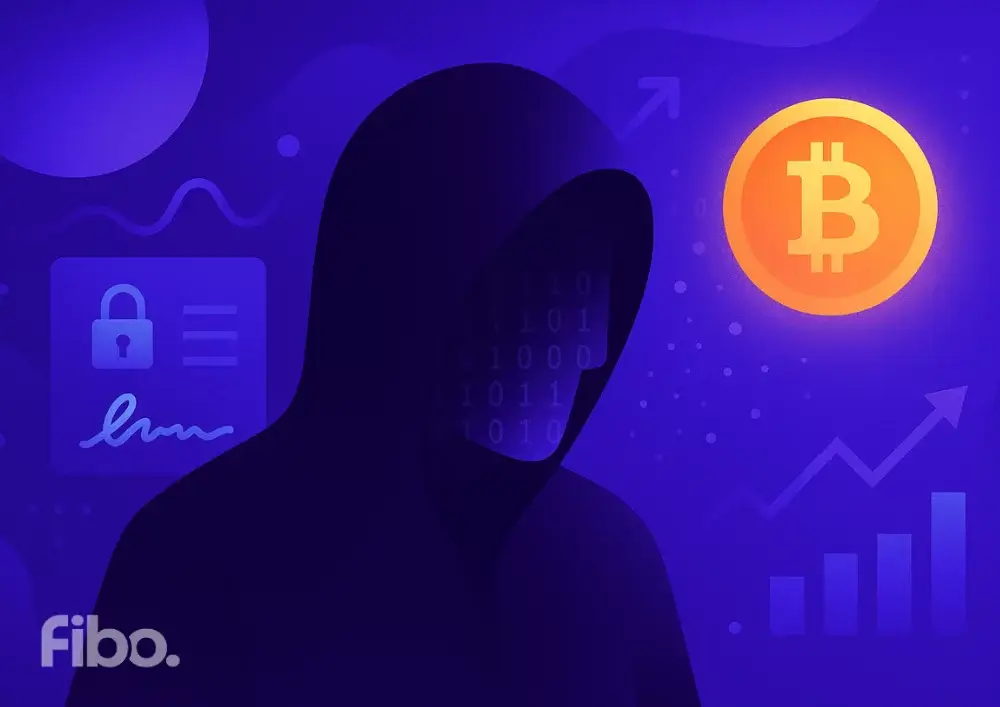
Simultaneously, journalist John Carreyrou (Pulitzer laureate, the reporter who broke the Theranos scandal) published a 12,000-word investigation in the New York Times on April 8, 2026. His conclusion: the most likely candidate is Adam Back, inventor of Hashcash and CEO of Blockstream.
The article draws on three independent stylistic analyses of the cypherpunk mailing list archives (1992-2008). All three point to Back as the top match. The journalist also highlights a suspicious silence: a regular voice in discussions about digital currency for years, Back goes quiet at the precise moment Bitcoin is announced.
Adam Back categorically denies it. He produced emails from 2008 showing that Satoshi contacted him as a stranger to verify a citation. The crypto community has largely supported his denial.
Craig Wright: The Impostor Tried and Convicted
One name can be definitively crossed off the list. On March 14, 2024, Justice James Mellor of the British High Court delivered a devastating 1,736-paragraph ruling. Craig Wright is NOT Satoshi Nakamoto.
The judge described the documents submitted by Wright as “forgeries.” He concluded that Wright “lied to the court extensively and repeatedly” and that his conduct constituted a “very serious abuse of the court’s process.” In December 2024, Wright was sentenced to one year in prison, suspended, and fined 145,000 pounds for contempt of court.
1.1 Million BTC: Satoshi’s Untouched Fortune
Whoever the real Satoshi is, one thing is certain. Approximately 1.1 million BTC lie dormant across some 22,000 addresses since 2009-2010. At $79,000 per coin, that amounts to roughly $85 billion. Not a single satoshi has ever moved.
Researcher Sergio Demian Lerner identified in 2013 the “Patoshi pattern“: a single miner, likely Satoshi, who deliberately limited their mining power to 1-2% of the total capacity. A gesture consistent with the creator’s philosophy: let the network grow naturally.
The Finding Satoshi documentary offers a simple argument to explain why these funds have never moved. William Cohan states: “If you owned a fortune of $100 billion, you wouldn’t just sit there living frugally.” The most likely hypothesis: Satoshi is deceased (Finney in 2014, Sassaman in 2011) and nobody holds the keys.
Paul Sztorc Wants to Redistribute Satoshi’s Bitcoins
The question of Satoshi’s coins is not merely theoretical. Paul Sztorc, architect of Drivechains, has announced a hard fork of Bitcoin planned for August 2026, dubbed “eCash.” His project calls for redistributing up to half of Satoshi’s BTC (~550,000 BTC, roughly $40 billion) to fund development.
The reaction has been overwhelmingly negative. 80-85% of comments oppose the project. Critics view redistributing dormant coins as a form of “theft.” No previous fork (Bitcoin Cash, Bitcoin SV) has ever touched Satoshi’s bitcoins. This would be a first.
Why Satoshi’s Anonymity Still Matters
After four documentaries, a NYT investigation and thousands of articles, the question remains without a definitive answer. And that may be precisely the point. The absence of an identified creator is what makes Bitcoin truly decentralized.
No central figure whose opinions could influence development. No target for regulators or hackers. Bitcoin’s success rests on collective effort, not on any single personality. As Satoshi wrote in his last email to Gavin Andresen: “Talk about the open source project and give more credit to the dev contributors. It helps motivate them.“
Glossary
- Satoshi Nakamoto: pseudonym of the creator (or creators) of Bitcoin, whose identity has remained unknown since 2008
- Whitepaper: the founding document published in 2008 describing how Bitcoin works and its consensus protocol
- Hashcash: a proof-of-work system invented by Adam Back in 1997, used as the basis for Bitcoin mining
- Cypherpunk: a movement advocating the use of cryptography to protect privacy and individual freedoms
- Bitcoin: the first decentralized cryptocurrency, created in 2009 by Satoshi Nakamoto
- Drivechain: a technical mechanism for creating secondary chains secured by Bitcoin miners (BIP-300)
Frequently Asked Questions
Who created Bitcoin according to the Finding Satoshi documentary?
The documentary concludes that Bitcoin was created by Hal Finney (the coder) and Len Sassaman (the whitepaper author). Finney died in 2014 and Sassaman in 2011. Learn more about Satoshi Nakamoto
Is Craig Wright Satoshi Nakamoto?
No. On March 14, 2024, the British High Court definitively ruled that Craig Wright is not Satoshi. The judge described his documents as forgeries and convicted him of contempt of court.
How many bitcoins does Satoshi Nakamoto own?
Satoshi owns approximately 1.1 million BTC spread across 22,000 addresses. At current prices, that represents roughly $85 billion. None of these bitcoins have ever been spent. Discover who holds the most Bitcoin
Why does Satoshi's identity still matter?
Satoshi’s anonymity guarantees Bitcoin’s decentralization. Without a central figure, the project depends on no single authority and withstands political and legal pressure.
What is the Patoshi pattern?
The Patoshi pattern, identified by Sergio Demian Lerner in 2013, is a distinctive mining signature in Bitcoin’s earliest blocks. It suggests that a single miner — likely Satoshi — deliberately limited their mining power to 1-2%.
Sources
This article is based on the following sources:
- Bitbo – Documentary Claims Finney and Sassaman Built Bitcoin
- The Block – Finding Satoshi: Hal Finney and Len Sassaman were Bitcoin’s co-creators
- CoinDesk – Inside the Hunt for Satoshi
- CNBC – NYT Investigation Ties Bitcoin Founder to Adam Back
- Protos – Are we done Finding Satoshi?
How to cite this article:
Fibo Crypto. (2026). Finding Satoshi: Who Really Created Bitcoin? The Documentary Reigniting the Investigation. Retrieved from https://fibo-crypto.fr/en/blog/finding-satoshi-documentary-bitcoin-creator
The simplest way to buy, swap and manage your crypto
Available on iOS and Android. No seed phrase, fees 3.5x lower, built-in DeFi yield.