Kalshi Banned in Nevada: Prediction Markets Face US Legal Battle
📋 En bref (TL;DR)
- Temporary ban in Nevada: Judge Jason D. Woodbury granted a temporary restraining order against Kalshi on March 20, 2026, blocking its sports, elections, and entertainment contracts for up to two weeks.
- First state-level ban: This is the very first time a U.S. state has banned Kalshi from operating within its borders, setting a major legal precedent for prediction markets.
- Percentage game: According to the judge, Kalshi operates a “percentage game” by collecting a commission on contracts, which falls under Nevada’s legal definition of gambling.
- Minors allowed: Kalshi permitted users under 21 to place bets, in direct violation of Nevada gambling laws.
- April hearing: A hearing on the injunction is scheduled for early April 2026 before the First Judicial District Court in Carson City.
- Domino effect: Arizona filed criminal charges against Kalshi on March 17, and Gemini faces a class-action lawsuit related to its pivot toward prediction markets.
- European stakes: Polymarket, a crypto-native prediction platform, was banned in the Netherlands in February 2026 and faces growing regulatory scrutiny under the EU’s MiCA framework.
On March 20, 2026, a Nevada judge ordered a temporary ban on Kalshi, the prediction market platform regulated by the CFTC. This marks the first time a U.S. state has officially blocked Kalshi’s operations within its borders. The decision comes amid rising tensions between federal and state regulators over the legal nature of these platforms: financial instruments or gambling?
For crypto investors in France and across Europe, this case goes well beyond the American context. Prediction markets, whether centralized like Kalshi or decentralized like Polymarket, are at the heart of a global regulatory battle. With MiCA now fully in effect in Europe and multiple U.S. states taking action, the entire sector is still searching for its legal framework.
What the Nevada judge decided
Judge Jason D. Woodbury, of the Carson City District Court, granted Nevada’s request for a temporary restraining order (TRO) against Kalshi. In practical terms, this decision blocks all event contracts offered by Kalshi in Nevada covering sports, elections, and entertainment, for a maximum period of two weeks.
The judge based his decision on two main arguments. First, Kalshi does not hold a license under the Nevada Gaming Control Act. Second, by collecting a commission on each contract purchased through its platform, Kalshi operates what Nevada law defines as a “percentage game” — which legally constitutes gambling activity.
The judge also noted that Kalshi had allowed users under 21 to use its platform, in direct violation of Nevada law prohibiting minors from gambling. A hearing on a potential permanent injunction is scheduled for early April 2026 before the First Judicial District Court in Carson City.

Why this is a turning point for Kalshi
Since its founding in 2021, Kalshi has held a unique status: it is the only event contract platform officially regulated by the CFTC (Commodity Futures Trading Commission), the federal regulator overseeing derivatives markets in the United States. This status had until now enabled the company to resist pressure from state regulators by invoking the exclusive jurisdiction of the federal regulator. Kalshi notably won a major judicial victory in 2024 against the CFTC itself, which had opposed its election contracts, before the agency reversed its position under new leadership.
But Nevada marks a precedent. This is the first time a state has successfully obtained a court order blocking Kalshi’s operations. And it is no longer an isolated case: on March 17, 2026, just three days before the Nevada decision, the Arizona Attorney General filed a 20-count criminal complaint against Kalshi, accusing it of operating an illegal gambling business. The charges include four counts of election betting (2028 presidential, Arizona governor, Republican primary, Secretary of State).
The CFTC vs. states jurisdictional battle
At the heart of the conflict are two competing legal visions. On one side, the CFTC considers event contracts to be derivatives falling under its exclusive federal jurisdiction. On the other, states like Nevada, Arizona, Massachusetts, and Tennessee classify them as sports betting and gambling activities subject to their local laws.
The financial stakes are considerable. According to an analysis by MultiState, U.S. states estimate they are collectively losing over $600 million in sports betting tax revenue due to prediction markets that are not regulated at the state level. Eleven states have already introduced bills in 2026, with approaches ranging from outright bans to taxation frameworks.
On March 12, 2026, the CFTC took a major step by publishing an Advanced Notice of Proposed Rulemaking (ANPRM), soliciting public comment on potential new rules for prediction markets. In parallel, the agency released guidelines to clarify the application of existing rules. A clear signal that the federal regulator intends to maintain control over this sector.
The domino effect: Gemini, Polymarket, and others
Gemini in turmoil
Kalshi is not the only platform affected by the regulatory wave surrounding prediction markets. Gemini, the platform founded by the Winklevoss twins, has been facing a class-action lawsuit since March 2026. Investors accuse the company of failing to disclose its strategic pivot toward prediction markets before its September 2025 initial public offering (IPO).
On February 5, 2026, the Winklevoss brothers announced “Gemini 2.0,” a revamp that included a focus on prediction markets, a 25% workforce reduction, and withdrawal from the European Union, the United Kingdom, and Australia. GEMI stock has fallen more than 80% since the IPO. Plaintiffs argue that Gemini was already aware of this strategic direction at the time of the IPO but chose not to inform investors.
Polymarket under pressure in Europe
On the decentralized prediction market side, Polymarket is not being spared either. In February 2026, the Dutch gambling authority (Kansspelautoriteit) ordered Polymarket to cease operations in the Netherlands, ruling that its services constitute unauthorized online gambling.
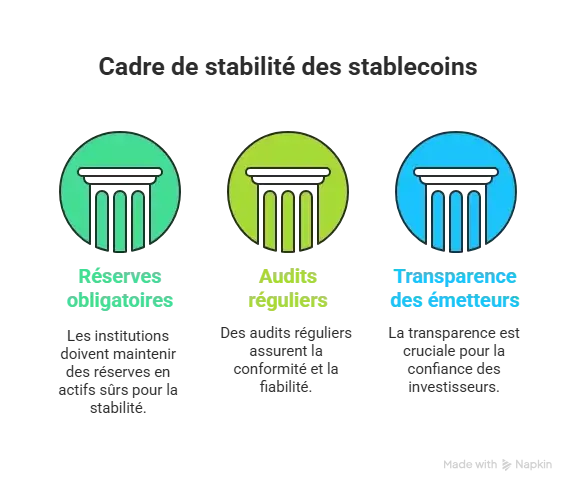
In France, the National Gambling Authority (ANJ) is among the first European regulators to have taken a stance against prediction markets. More broadly, the lack of a specific framework for these platforms in the MiCA (Markets in Crypto-Assets) regulation leaves each EU member state free to apply its own gambling laws. A legal vacuum that creates major uncertainty for operators and European users alike.
The situation is all the more paradoxical given that MiCA, fully operational since late 2024, was designed to harmonize crypto regulation across Europe. But prediction markets, whether blockchain-based or not, fall into a gray area between derivative financial instruments and games of chance — two categories subject to very different regulations.
What this means for crypto investors
The Kalshi ban in Nevada and the growing number of regulatory actions send a clear signal: prediction markets, long considered a fast-growing niche, now face systemic regulatory risk.
For prediction platform users, the practical consequences are immediate. Active contracts in Nevada are frozen. Arizona users face potential legal complications. And Europeans using Polymarket or similar platforms should be aware that their activity may be reclassified as illegal gambling in their country of residence.
The conflict between the CFTC and U.S. state regulators could ultimately end up before the United States Supreme Court, given the contradictory rulings from federal and state courts. In the meantime, sector operators are navigating a legal fog that could stifle innovation — or push it toward more accommodating jurisdictions.
For French investors, this case is a reminder of the importance of verifying the regulatory status of the platforms they use. In France, prediction markets do not benefit from any specific legal framework, and any activity that can be classified as online betting falls under the jurisdiction of the ANJ. Caution remains advisable pending European regulatory clarity.
The Kalshi case in Nevada illustrates a broader paradox within the crypto ecosystem: an inherently borderless technology confronted with a patchwork of local regulations. Whether one supports or opposes prediction markets, one thing is certain — the coming weeks, with the April hearing in Nevada and the ongoing proceedings in Arizona, will be decisive for the future of this sector in the United States and, by extension, in Europe.
Glossary
- Prediction market : a platform that allows users to buy and sell contracts whose value depends on the outcome of a future event (election, sports result, economic event). Functions like an exchange where prices reflect the estimated probability of an outcome.
- CFTC (Commodity Futures Trading Commission) : the U.S. federal regulator responsible for overseeing derivatives markets, including futures contracts and swaps. Since 2020, the CFTC also regulates certain event contract platforms such as Kalshi.
- Event contract : a financial instrument whose payout is determined by the outcome of a specific event. Unlike a traditional bet, it is traded on a regulated market and can be resold before expiration.
- Polymarket : a decentralized prediction market platform built on the Polygon blockchain. Unlike Kalshi (centralized and regulated by the CFTC), Polymarket operates via smart contracts and uses stablecoins (USDC) for transactions.
- MiCA (Markets in Crypto-Assets) : a European regulation that came into effect in 2024 governing issuers and service providers of digital assets within the European Union. MiCA does not explicitly cover prediction markets, creating a legal vacuum for these platforms in Europe.
- TRO (Temporary Restraining Order) : a temporary restraining order issued by a U.S. court to prohibit an activity on an urgent basis, typically for a period of 14 days, pending a full hearing on the merits.
Frequently asked questions
Why was Kalshi banned in Nevada?
Judge Jason D. Woodbury ruled that Kalshi was operating a “percentage game” by collecting a commission on contracts, which constitutes gambling activity under Nevada law. Kalshi did not hold a gaming license and allowed users under 21 to participate, in violation of state law.
Is Kalshi completely banned in the United States?
No, the ban currently applies only to Nevada (temporarily) and Arizona (criminal charges). Kalshi continues to operate in most U.S. states thanks to its federal CFTC license. However, other states may follow Nevada’s example.
What is the difference between Kalshi and Polymarket?
Kalshi is a centralized platform regulated by the CFTC that uses U.S. dollars. Polymarket is decentralized, built on the Polygon blockchain, and uses stablecoins (USDC). Kalshi targets a mainstream American audience, while Polymarket is globally accessible but faces growing bans in Europe.
Are prediction markets legal in France?
There is no specific legal framework for prediction markets in France. The National Gambling Authority (ANJ) generally considers these activities to be online betting, which requires a license. Using an unlicensed platform carries legal risks. The MiCA regulation does not explicitly cover this sector.
What is at stake in the battle between the CFTC and U.S. states?
The CFTC considers event contracts to be derivatives falling under its exclusive federal jurisdiction. States classify them as gambling subject to their local laws. The stakes are estimated at over $600 million in tax revenue for the states, and the question could ultimately reach the United States Supreme Court.
What risks do European Polymarket users face?
European users risk penalties for unauthorized online gambling. The Netherlands already ordered Polymarket to cease operations in February 2026. Each EU member state applies its own laws in the absence of a harmonized framework within MiCA for prediction markets.
Sources
This article is based on the following sources:
- TechCrunch – Amid legal turmoil, Kalshi is temporarily banned in Nevada (March 20, 2026)
- CoinDesk – Kalshi gets temporary Nevada ban in dispute over sports betting (March 20, 2026)
- Arizona Attorney General – Charges Kalshi With Illegal Gambling Operation (March 17, 2026)
- Decrypt – Gemini Faces Class-Action Suit Over Prediction Market Pivot (March 2026)
- MultiState – States vs. Prediction Markets: Regulatory Battles (March 19, 2026)
How to cite this article: Fibo Crypto. (2026). Kalshi banned in Nevada: first U.S. state ban for the prediction market platform. Retrieved March 22, 2026 from https://fibo-crypto.fr/blog/kalshi-interdit-nevada-marche-prediction
Follow Fibo on Google: add us to your preferred sources
The simplest way to buy, swap and manage your crypto
Available on iOS and Android. No seed phrase, fees shown upfront, built-in DeFi yield.