Fake Ledger App: Musician Loses $424,000 in Bitcoin on the App Store
📋 En bref (TL;DR)
- 5.92 BTC stolen ($424,000): musician G. Love lost his 10-year Bitcoin “retirement fund” through a fake Ledger app
- Fake app on Mac App Store: a near-perfect replica of Ledger Live that asked for the 24-word seed phrase
- Funds laundered via KuCoin: blockchain investigator ZachXBT traced 9 transactions to KuCoin deposit addresses
- $11.4 billion in crypto fraud in 2025: the FBI reports a record high, with seniors (60+) accounting for 40% of losses
- Apple under scrutiny: how did a fake financial application bypass the App Store review process?
- Golden rule: NEVER enter your seed phrase on a computer, phone, or website — only on the physical Ledger device itself
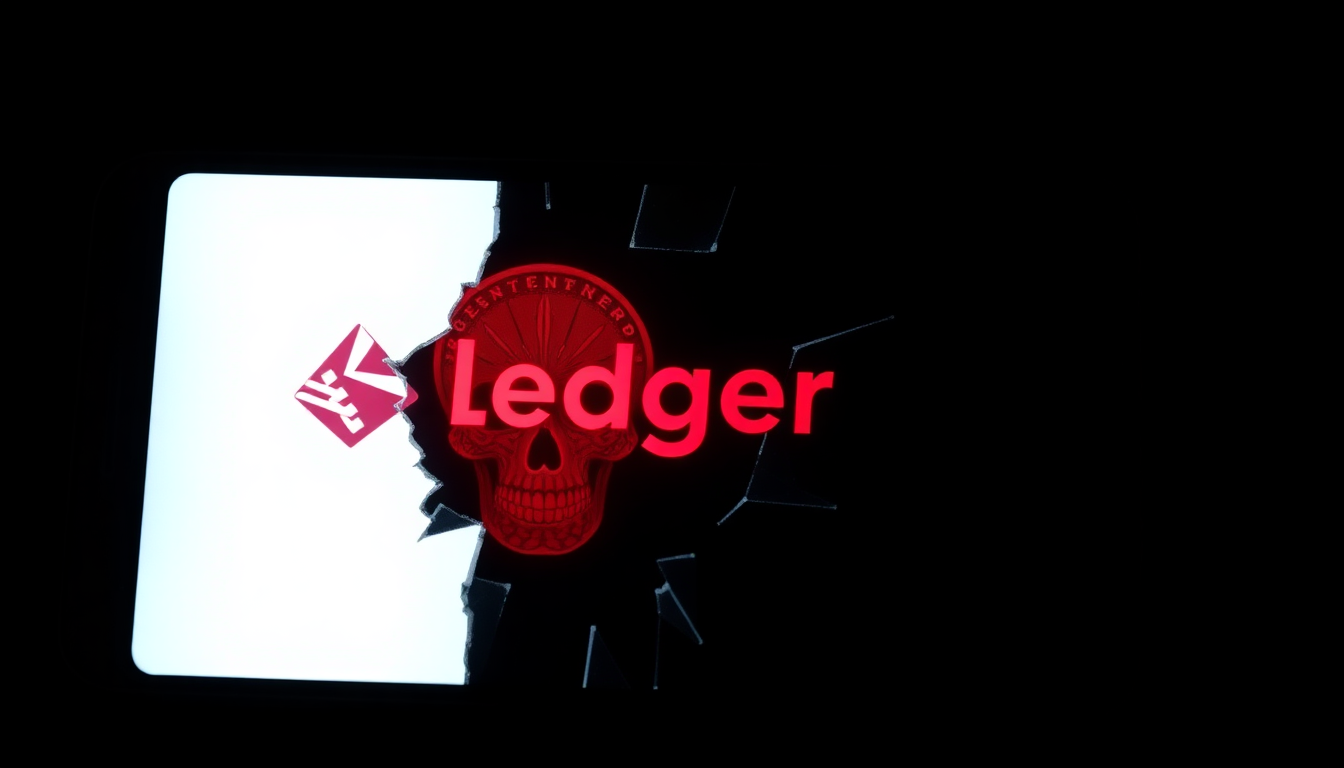
On April 11, 2026, American musician G. Love (Garrett Dutton), frontman of G. Love & Special Sauce, revealed on X that he lost 5.92 BTC — approximately $424,000 — after downloading a fake Ledger app from Apple’s Mac App Store. A case that illustrates the growing sophistication of scams targeting Bitcoin holders and serves as a reminder of a fundamental security rule.
How G. Love lost $424,000 in an instant
It started simply enough. G. Love was setting up his Ledger hardware wallet on a new Mac. He searched for the Ledger Live application on the Mac App Store and downloaded what appeared to be the official app. The problem: it was a near-perfect replica published by a third-party developer.
The fraudulent application asked him to enter his 24-word seed phrase — the recovery key that grants total access to the wallet. As soon as G. Love entered it, the attackers drained his wallet “in an instant.”
On X, the musician shared his distress:
“I lost my retirement fund in a hack/scam when I switched my Ledger over to my new computer and by accident downloaded a malicious Ledger app from the Apple Store. All my BTC gone in an instant.”
“I lost 5.9 BTC, all I had for ten years. I’ve been in the crypto circus since 2017. Today they caught me off guard.”
ZachXBT’s investigation: funds laundered through KuCoin
Blockchain investigator ZachXBT quickly traced the stolen funds. His findings: the 5.92 BTC were dispersed across 9 separate transactions before being deposited at addresses linked to the KuCoin exchange.
ZachXBT pointed to a systemic problem: “KuCoin has an ongoing problem with illicit services abusing broker/personal accounts which compliance does nothing to regulate.” The exchange lost its European MiCA license in February 2026, after Austria’s FMA banned it over anti-money laundering compliance gaps.
A recurring problem on the App Store
This is not an isolated incident. Fake crypto apps regularly bypass Apple’s review process:
Previous cases:
- November 2023: a fake “Ledger Live Web3” app on the Microsoft Store stole $768,000 (16.8 BTC)
- February 2024: a fake Rabby Wallet app appeared on the App Store
- 2024-2025: over 30 fake apps mimicking Phantom, MetaMask, and Trust Wallet detected in 3 months
The technique is often the same: submit an innocent app (QR reader, utility) that passes Apple’s review, then redirect to a phishing interface after approval. Apple has not commented on the incident.
FBI: $11.4 billion in crypto fraud in 2025
The FBI’s annual cybercrime report, released April 7, 2026, confirms the scale of the problem. Crypto fraud losses hit a record $11.4 billion in 2025, up 22% from 2024.
Key figures from the FBI report
- 181,565 complaints filed (+21% year-over-year)
- Average loss per victim: $62,604
- Investment scams: $7.2 billion (+25%)
- Recovery scams (fake services promising to retrieve stolen funds): $1.4 billion
- Crypto ATM fraud: $389 million (+58%)
Seniors over 60 are the hardest hit: $4.4 billion in losses, nearly 40% of the total. The FBI’s “Operation Level Up” prevented $500 million in losses by alerting 8,000 potential victims.
How to protect yourself: the 5 essential rules
G. Love’s case shows that even an experienced investor (in crypto since 2017) can be caught off guard. Here are the rules to follow without exception:
1. NEVER enter your seed phrase on a connected device
The 24-word seed phrase should never be entered on a computer, phone, or website. It should only be entered directly on the physical Ledger (or Trezor, etc.) device during recovery. No legitimate app will ever ask for it.
2. Download only from the official website
Never search for “Ledger” on the App Store, Google Play, or Microsoft Store. Download Ledger Live only from ledger.com. Same rule for MetaMask (metamask.io), Phantom, Trust Wallet, etc.
3. Verify the developer name
If you must use a store, verify that the developer is the official publisher (e.g., “Ledger SAS”). An unknown or recently created developer account is a red flag.
4. Beware of artificial ratings
Fake apps often use inflated positive reviews. Check the consistency of reviews, publication dates, and download counts.
5. Use offline storage for seed phrases
Store your seed phrases offline, on paper or metal, in a secure location. Never photograph them, never store them in the cloud, never keep them in a phone note.
G. Love’s response
Despite the loss, the musician showed resilience. After performing at Tortuga Fest the following day, he wrote:
“Just to be clear, my BTC got hacked, nothing else. Sucks but I will carry on with my life. A lot of people lost a lot more than me. Give thanks for my health, family and friends and my music.”
He acknowledged his share of responsibility — “It was my own damn fault for not being more diligent” — while sounding a warning to the crypto community. A rare transparency that helps raise awareness about risks that even seasoned investors underestimate.
📚 Glossary
- Bitcoin (BTC): The first cryptocurrency, created in 2009. A decentralized network enabling value transfers without intermediaries. Trading around $70,800 as of April 13, 2026.
- Seed phrase (recovery phrase): A sequence of 24 words generated when creating a crypto wallet. It grants total and irreversible access to all funds. Whoever possesses it controls the wallet.
- Ledger: A French company (Paris) that manufactures hardware wallets for storing cryptocurrencies offline. The Ledger Nano and Ledger Stax are their flagship products.
- Hardware wallet: A physical device that stores private keys offline, protecting cryptocurrencies from online hacks. The most well-known: Ledger, Trezor, Bitkey.
- Phishing: A fraud technique that involves mimicking a legitimate service to steal sensitive information. In crypto, attacks primarily target seed phrases and private keys.
- KYC (Know Your Customer): An identity verification procedure required by regulated exchanges. KuCoin was sanctioned for shortcomings in its KYC/AML procedures.
Frequently Asked Questions
What happened to musician G. Love with Ledger?
On April 11, 2026, musician G. Love (Garrett Dutton) downloaded a fake Ledger app from Apple’s Mac App Store. The app asked for his 24-word seed phrase, allowing scammers to steal his 5.92 BTC ($424,000), which he had accumulated since 2017.
How to recognize a fake Ledger application?
Check that the developer is “Ledger SAS.” Only download Ledger Live from ledger.com, never from an app store. No legitimate application will ask for your 24-word seed phrase. Be wary of recently published apps with suspicious reviews.
Can a legitimate app ask for my seed phrase?
No, never. No application, website, or legitimate service will ask for your seed phrase (24-word recovery phrase). This phrase should only be entered directly on the physical Ledger device during a recovery procedure. If anyone asks for it, it’s a scam.
How much did Americans lose to crypto scams in 2025?
According to the FBI’s annual report published in April 2026, crypto fraud losses hit a record $11.4 billion in 2025, up 22% from 2024. Seniors over 60 accounted for 40% of losses ($4.4 billion).
How to store cryptocurrencies safely in 2026?
Use a hardware wallet (Ledger, Trezor) by downloading the software only from the official website. Store your seed phrase on paper or metal, offline, in a secure location. Never photograph it and never store it in the cloud. Enable two-factor authentication on your exchange accounts.
📰 Sources
This article is based on the following sources:
- Bitcoin.com – Philadelphia Musician G. Love Loses Nearly 6 BTC to Fake Ledger Wallet App (April 11, 2026)
- CoinDesk – Americans’ Losses to Crypto Scams Rose to Over $11 Billion Last Year, FBI Reports (April 7, 2026)
- Coin-Turk – Fake Ledger App on Mac Store Drains $424,000 in Bitcoin from G. Love (April 12, 2026)
- Yellow.com – Fake Ledger App Mac Store Bitcoin Theft (April 12, 2026)
How to cite this article: Fibo Crypto. (2026). Fake Ledger App: Musician Loses $424,000 in Bitcoin on the App Store. Retrieved April 13, 2026 from fibo-crypto.fr
The simplest way to buy, swap and manage your crypto
Available on iOS and Android. No seed phrase, fees shown upfront, built-in DeFi yield.