ADAN 2026 Barometer: 11% of French Citizens Hold Crypto, France Last in Europe
📋 En bref (TL;DR)
- 11% of French citizens hold crypto assets: stabilizing after a 12% peak in 2024, according to the 5th ADAN/IPSOS barometer
- 93% awareness: virtually all French citizens know about cryptocurrencies, up 16 points since 2022
- France ranks last among the 6 European countries surveyed: the Netherlands leads at 20%, Germany at 17%, the UK at 16%
- Only 2% of wealth allocated to crypto in France, compared to 26% in the UK
- 78% cite tax complexity as a barrier: the flat tax at 31.4% and the DAC8 directive weigh on adoption
- 50% of investors use DeFi: and 1 in 2 French savers want their bank to manage their crypto
- MiCA deadline July 1, 2026: PSAN-registered providers that haven’t converted to CASP will lose operating rights in France
The Association for the Development of Digital Assets (ADAN) published its 5th annual barometer on crypto-asset adoption on April 8, 2026, conducted with IPSOS. Presented at the French Ministry of Economy and Finance at Bercy, the report paints a mixed picture: crypto awareness is nearly universal in France (93%), but actual adoption lags behind the rest of Europe.
With 11% of holders, France ranks last among the 6 European countries surveyed. A paradox for a country that pioneered crypto regulation. Here’s a complete analysis of the numbers and what they mean for investors.
11% of French citizens hold crypto: structural maturity
The crypto-asset ownership rate in France stands at 11% of the population, slightly up from 10% in 2025, but down from the 12% peak reached in 2024. In total, 14% of French citizens have purchased crypto at some point.
Historical evolution
2022: 8% | 2023: 9.4% | 2024: 12% (peak) | 2025: 10% | 2026: 11%
ADAN describes this phase as “structural maturity”: the market is no longer in rapid growth mode but in a phase of progressive integration into the mainstream financial landscape. Encouraging: 32% of non-holders say they are open to future acquisition.
Profile of the typical French crypto holder
- 70% male, 30% female
- Average age: 39
- 50% are between 18 and 34
- Predominantly college-educated
- 42% earn less than €30,000/year

France last in Europe: the regulatory paradox
The most striking finding: France is the least crypto-adopted of the 6 countries studied.
Ownership rates by country (January 2026)
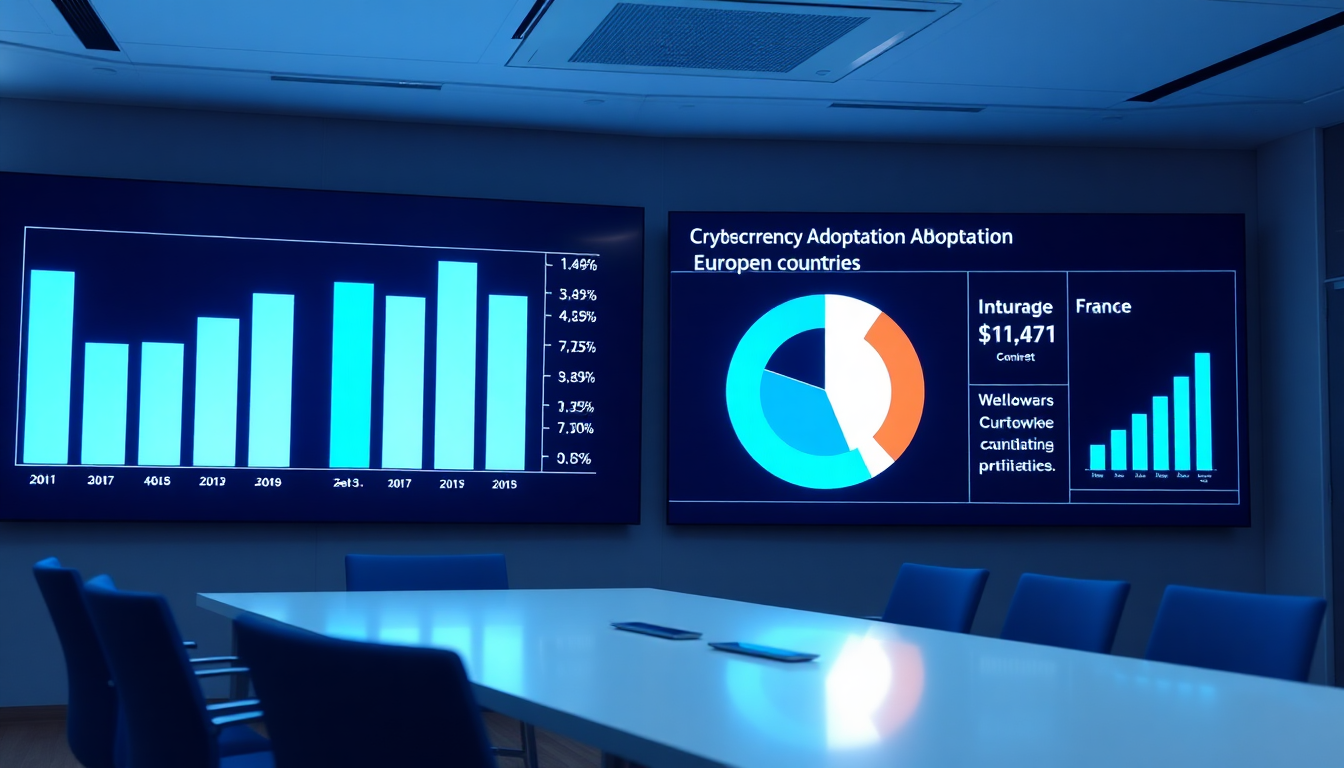
Netherlands: 20% | Germany: 17% | United Kingdom: 16% | Belgium: 15% | Italy: 13% | France: 11%
The gap is significant: the Netherlands has nearly double France’s adoption rate. Even more telling, the French allocate only 2% of their wealth to crypto, compared to 26% in the UK and 22% in Belgium.
Why is France lagging?
The French paradox: a pioneering regulatory framework (Pacte Act 2019, PSAN regime) perceived as too restrictive. According to the barometer:
- 39% of French citizens consider national regulation too restrictive
- 77% of active investors view policy as too restrictive or insufficiently engaged
- 78% cite tax complexity as a major barrier
The flat tax increased to 31.4% on January 1, 2026 (up from 30%), and the European DAC8 directive now requires platforms to automatically report transactions to tax authorities. The French tax authority received over 15,000 clarification requests in Q1 2026.
Investment behavior: caution and HODL
French investors remain cautious in their approach:
- 80% hold less than €5,000 in crypto
- 64% allocate less than 10% of their savings to crypto
- 88% make fewer than 2 transactions per month
- The long-term holding (HODL) strategy dominates
Most-held cryptocurrencies
Bitcoin: 66% of portfolios | Ethereum: 39% | Solana: 21% | USDC: 20%
Notable: 53% of holders express interest in euro-pegged stablecoins, a strong signal for projects like SG-Forge’s EURCV (Société Générale).
DeFi gains traction
The barometer’s surprise: 50% of crypto buyers use decentralized finance protocols (automated lending, borrowing). And nearly 1 in 2 French savers wants their bank to manage their crypto holdings — a signal that the market is waiting for institutional solutions.
The MiCA transition: deadline July 1, 2026
The regulatory landscape is in flux. France’s PSAN regime is gradually giving way to the European MiCA framework, which requires crypto service providers to obtain a CASP (Crypto-Asset Service Provider) license to operate.
Deadline: July 1, 2026. PSAN-registered providers that haven’t converted to CASP will no longer be able to operate in France. The AMF (French financial authority) noted in March that the review process can take up to 4 months after a complete application is filed.
This MiCA transition offers a major advantage: the European passport, allowing a provider licensed in one EU country to operate across the entire European Economic Area. A potential accelerator for the French ecosystem.
Banks enter the arena
The barometer confirms a major trend: institutional adoption. In 2026, 20% of European MiCA CASP licenses are held by banks, according to Ledger Insights.
In France:
- BNP Paribas launched a pilot crypto custody service and offers crypto ETNs for retail clients
- SG-Forge (Société Générale) launched EURCV, Europe’s first bank-issued euro stablecoin
- Ledger (Paris) reports a 30% increase in wallet sales in 2026
Among wealth managers, an OpinionWay/Bitpanda/ADAN study (January 2026) reveals that 64% of their clients already hold crypto, but only 16% offer structured exposure. A gap between supply and demand that represents a major opportunity.

📚 Glossary
- Crypto-asset: The legal term used in France and the EU for any blockchain-based digital asset. Includes cryptocurrencies (Bitcoin, Ethereum), stablecoins, and tokens.
- Bitcoin (BTC): The first cryptocurrency, held by 66% of French crypto investors according to the 2026 ADAN barometer.
- PSAN (Prestataire de Services sur Actifs Numériques): France’s crypto service provider regulatory status created by the Pacte Act of 2019, requiring AMF registration. Being gradually replaced by the European CASP license. This regime ended on 1 July 2026 and has been replaced by CASP authorisation under the EU MiCA regulation.
- MiCA (Markets in Crypto-Assets): The EU regulation harmonizing crypto-asset regulation across the European Union. Gradually enforced since 2024, it requires the CASP license for service providers.
- Stablecoin: A cryptocurrency pegged to a stable asset (dollar, euro). USDC is present in 20% of French portfolios. SG-Forge launched EURCV, a French euro stablecoin.
- DeFi (Decentralized Finance): A set of financial services (lending, borrowing, trading) running on blockchain without banking intermediaries. Used by 50% of French crypto investors.
- Flat tax: The flat-rate withholding tax applied to crypto capital gains in France. Increased to 31.4% in 2026 (12.8% income tax + 18.6% social contributions).
- DAC8: A European directive requiring automatic exchange of tax information on crypto transactions across 48 countries since January 1, 2026.
Frequently Asked Questions
How many French citizens own cryptocurrency in 2026?
According to the ADAN/IPSOS barometer published in April 2026, 11% of the French population holds crypto-assets, approximately 6 million people. This is a slight increase from 10% in 2025, but down from the 12% peak reached in 2024.
What is the typical profile of a French crypto investor?
The average French crypto investor is male (70%), aged 39, college-educated. 50% of holders are between 18 and 34. 80% hold less than €5,000 in crypto and favor a long-term holding (HODL) strategy.
Why is France behind in crypto adoption in Europe?
France ranks last among the 6 European countries studied (11% vs 20% in the Netherlands). The main barriers are tax complexity (cited by 78% of investors), regulation perceived as too restrictive (77%), and the flat tax at 31.4% on capital gains.
How are cryptocurrencies taxed in France in 2026?
Crypto capital gains are subject to a flat tax of 31.4% (12.8% income tax + 18.6% social contributions) since January 1, 2026. An exemption threshold of €305/year exists: below this, no tax is due. Since 2026, the DAC8 directive requires platforms to automatically report transactions.
What does the PSAN to MiCA transition mean for investors?
France’s PSAN regime is being replaced by the European CASP license (MiCA). Deadline: July 1, 2026. Non-compliant platforms will no longer be able to operate. For investors, MiCA provides harmonized protection across the EU and allows platforms to operate throughout the European Economic Area.
📰 Sources
This article is based on the following sources:
- ADAN – 2026 Barometer: Crypto-asset adoption in France and Europe (April 8, 2026)
- Journal du Coin – Crypto adoption in France and Europe: ADAN publishes its annual barometer
- Cryptoast – 11% of French citizens hold cryptocurrencies (April 2026)
- Planet Fintech – ADAN 2026 Barometer (April 2026)
- Planète CSCA – OpinionWay / ADAN / Bitpanda study on wealth managers and crypto (January 2026)
How to cite this article: Fibo Crypto. (2026). ADAN 2026 Barometer: 11% of French Citizens Hold Crypto, France Last in Europe. Retrieved April 13, 2026 from fibo-crypto.fr
The simplest way to buy, swap and manage your crypto
Available on iOS and Android. No seed phrase, fees shown upfront, built-in DeFi yield.