California Crypto Licensing: DFAL Takes Effect July 2026
📋 En bref (TL;DR)
- Deadline set: By July 1, 2026, all crypto businesses serving California residents must hold a DFAL license, have submitted an application, or qualify for an exemption
- Applications open March 9: License applications will be accepted via the Nationwide Multistate Licensing System (NMLS) starting March 9, 2026
- BitLicense comparison: DFAL mirrors New York’s controversial 2015 regime, which triggered an exodus of several major platforms
- California’s economic weight: As the world’s 4th largest economy and home to 25% of American blockchain companies, California could establish a de facto national standard
- Enhanced consumer protections: Transparency requirements, mandatory 10-hour daily customer support, stablecoin regulations, and crypto kiosk oversight
- Risk for smaller players: Capital and compliance requirements could push undercapitalized firms to exit the state
California Enters a New Era of Crypto Regulation
The California Department of Financial Protection and Innovation (DFPI) has taken a decisive step in implementing its crypto regulations. The agency officially confirmed the enforcement timeline for the Digital Financial Assets Law (DFAL), setting July 1, 2026 as the deadline for all businesses operating in the digital asset sector in California.
This announcement marks the culmination of a process that began in October 2023, when Governor Gavin Newsom signed the law creating the first comprehensive regulatory framework for cryptocurrencies in the most populous U.S. state. With nearly a quarter of American blockchain companies based in California and its status as the world’s fourth-largest economy, California is sending a clear signal: the crypto Wild West era is coming to an end.
What Is DFAL? A Comprehensive Regulatory Framework
A Multi-Layered Legislative Architecture
The DFAL results from the combination of two major legislative texts. The first, Assembly Bill 39 (AB 39), establishes licensing requirements for any person or business wishing to engage in digital asset activities with or on behalf of California residents. The second, Senate Bill 401 (SB 401), creates specific rules for crypto kiosks (Bitcoin ATMs).
Originally scheduled for July 2025, the effective date was postponed by one year through AB 1934, giving businesses additional time to prepare. Applications will be accepted starting March 9, 2026 via the Nationwide Multistate Licensing System (NMLS), the federal platform already used for financial services licenses.
Who Must Obtain a License?
DFAL’s scope is considerable. It covers all businesses that:
- Exchange, transfer, or hold digital assets for California residents
- Issue digital assets redeemable for money or other cryptocurrencies
- Issue or hold electronic certificates representing precious metals
- Exchange video game virtual currencies for real money or cryptocurrencies
However, exemptions exist for regulated banks, businesses generating less than $50,000 annually in crypto activity, and those providing only software services to decentralized networks.
Requirements for Licensed Businesses
Strict Capital and Liquidity Requirements
DFAL license holders must maintain capital and liquidity levels determined by the DFPI, ensuring their ability to meet obligations to customers. A surety bond or trust account will also be required as additional consumer protection.
These businesses must implement robust policies and procedures regarding:
- Security and cybersecurity
- Risk management
- Fraud prevention
- Regulatory compliance
Enhanced Consumer Transparency
DFAL imposes comprehensive disclosure requirements. Businesses must provide:
- A complete schedule of fees and commissions
- Information about any insurance coverage
- Details on liability for unauthorized or erroneous transfers
- Detailed receipts for each transaction
- A history of service disruptions affecting more than 10,000 customers in the past 12 months
Notably, licensed businesses must provide live telephone customer support for 10 hours each business day—a requirement rarely seen in the crypto industry.
Asset Listing Oversight
Before offering any digital asset for sale to California residents, platforms must conduct prior due diligence on that asset. This measure aims to protect investors from fraudulent projects or rug pulls that have marked the sector’s recent history.
Specific Regulations for Crypto Kiosks
The SB 401 component of DFAL specifically targets crypto kiosks (Bitcoin ATMs), which have become major vectors for scams targeting elderly individuals. New rules include:
- Daily limit of $1,000 per customer per kiosk
- Capped transaction fees
- Mandatory detailed receipts for each transaction
- Mandatory reporting of all kiosk locations to the DFPI
These restrictions, partially in effect since January 2024, represent some of the strictest protections in the world for this type of service.
Stablecoin Regulation: A Major Concern
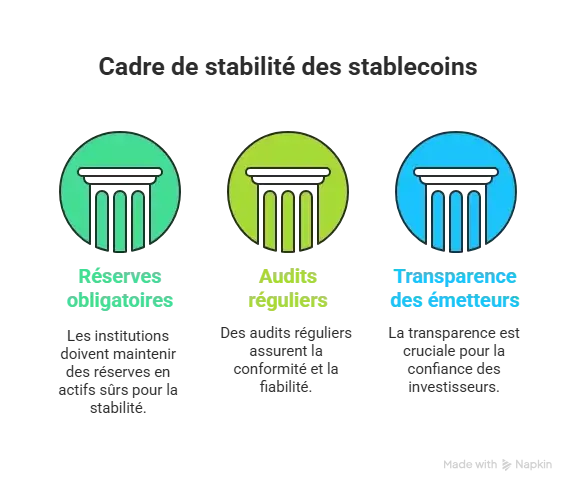
DFAL also introduces a specific framework for stablecoins. No stablecoin may be offered to California residents without meeting reserve requirements and other obligations ensuring users’ ability to redeem their tokens for fiat currency.
This provision anticipates national discussions around the GENIUS Act passed at the federal level in 2025, while allowing California to maintain potentially stricter standards.
The Shadow of BitLicense: Exodus Risk or Opportunity?
The 2015 New York Precedent
DFAL’s structure inevitably recalls New York’s BitLicense from 2015, the first attempt at crypto regulation at the U.S. state level. That regime triggered a genuine industry exodus: major platforms like Kraken and Bitfinex chose to cease operations in New York rather than comply with requirements deemed excessive.
Could history repeat itself in California? The question is stirring the industry.
Cautious Optimism from the Industry
Joe Ciccolo, Executive Director of the California Blockchain Advocacy Coalition, tempers concerns: « California is the fourth-largest economy in the world, so its regulatory choices inevitably carry weight. Companies wanting access to California residents could standardize their compliance programs nationally rather than operating state by state. »
According to him, clear and predictable rules could improve upon past state licensing experiences. « Clear rules tend to attract serious operators and institutional capital, » he emphasizes, while acknowledging that « marginal or undercapitalized players might choose to leave California rather than meet the new licensing standards. »
A Delicate Balance to Strike
The main risk identified by industry players concerns enforcement. If enforcement is perceived as « too aggressive or disconnected from operational realities, » activity could migrate offshore or underground, according to Ciccolo.
« Finding the right balance between consumer protection and market viability will be key, » he concludes.

A National Context in Full Transformation
States Taking Over from Federal Authorities
California’s initiative is part of a broader movement to strengthen crypto regulation at the state level. As federal agencies (DOJ, SEC, CFTC) have recently revised their enforcement priorities, state regulators are filling the void.
In New York, Manhattan District Attorney Alvin Bragg recently proposed the CRYPTO Act, which would make unlicensed crypto activity a criminal offense carrying up to 15 years in prison for amounts exceeding one million dollars. California itself imposed a $500,000 fine on Nexo Capital for offering crypto loans without a license.
Toward a De Facto National Standard?
With its economic weight and concentration of tech companies, California could effectively impose its standards on the entire American market. Since companies often prefer to harmonize their compliance rather than managing different regimes in each state, DFAL could become the reference standard.
Timeline and Next Steps
Affected businesses must now actively prepare:
- March 9, 2026: Applications open via NMLS
- March 23, 2026: Industry training organized by DFPI
- July 1, 2026: Deadline—license obtained, application submitted, or valid exemption required
Businesses that fail to meet this deadline without an active application or valid exemption will face enforcement actions from the DFPI.
📚 Glossary
- DFAL (Digital Financial Assets Law): California law signed in October 2023 creating a comprehensive regulatory framework for cryptocurrency activities, including licensing, capital requirements, and consumer protection measures.
- BitLicense: Regulatory license created by New York State in 2015 for crypto businesses. This pioneering but controversial regime led several major platforms to exit the state.
- Stablecoin: A cryptocurrency whose value is pegged to a stable asset, typically the U.S. dollar. The most well-known are USDT (Tether) and USDC (Circle).
- Crypto Kiosk (Bitcoin ATM): Physical machine allowing users to buy or sell cryptocurrencies for cash. Often targeted by scammers due to their hard-to-trace transactions.
- Rug Pull: A type of scam where crypto project creators disappear with investor funds after artificially inflating the token’s value.
- NMLS (Nationwide Multistate Licensing System): U.S. federal platform used for managing financial services licenses across different states.
Frequently Asked Questions
What is DFAL and when does it take effect?
The Digital Financial Assets Law (DFAL) is a California law signed in October 2023 creating a regulatory framework for cryptocurrencies. The deadline to obtain a license or submit an application is July 1, 2026.
Which businesses are subject to DFAL?
Any business that exchanges, transfers, or holds digital assets for California residents is subject to DFAL. This includes exchanges, custody services, stablecoin issuers, and crypto kiosk operators.
Are there exemptions to DFAL?
Yes, certain exemptions exist: regulated banks, businesses generating less than $50,000 annually in crypto activity, and those providing only software services to decentralized networks.
Is DFAL similar to New York’s BitLicense?
Yes, the two regimes share structural similarities. The 2015 BitLicense caused several platforms to exit New York. DFAL could have a similar impact, though some experts believe it could create a de facto national standard.
How do I apply for a DFAL license?
Applications will open starting March 9, 2026 via the NMLS (Nationwide Multistate Licensing System). The DFPI is organizing an industry training session on March 23, 2026 to assist businesses.
📰 Sources
This article is based on the following sources:
- Decrypt – California Begins Enforcing State-Level Crypto Licensing With DFAL (February 2026)
- DFPI California – Official Digital Financial Assets Law FAQ
- Fenwick – States Step Up Enforcement of Crypto Firms Operating Without Required Licenses (February 2026)
- Dechert – California’s Digital Financial Assets Law (November 2023)
How to cite this article: Fibo Crypto. (2026). California Crypto Licensing: DFAL Takes Effect July 2026. Retrieved February 18, 2026 from https://fibo-crypto.fr/en/blog/california-dfal-crypto-licenses-july-2026