Best Crypto Wallets 2026: Complete Comparison Guide
📋 En bref (TL;DR)
- 10 wallets compared: Ledger, Trezor, Tangem, MetaMask, Phantom, Trust Wallet, Rabby, ZenGo, Coinbase Wallet and Fibo
- Hot vs cold: hardware wallets (cold) offer maximum security, software wallets (hot) offer maximum convenience
- Self-custody: in 2026, 59% of crypto users prefer controlling their own private keys
- Key trend: passkeys and social recovery are gradually replacing the seed phrase
- Our advice: choose your wallet based on your profile — beginner, regular investor or advanced DeFi user
Why your crypto wallet choice matters in 2026
Your crypto wallet is the vault for your digital assets — and not all vaults are created equal. In 2026, the crypto wallet market exceeds $15 billion, with over 820 million active wallets worldwide. Your wallet choice determines the security of your funds, your access to DeFi, and your day-to-day experience.
After the FTX collapse and multiple security incidents of 2024-2025, one thing is clear: trusting your crypto to a third party carries real risks. That’s why self-custody — controlling your own private keys — has become the recommended standard in the crypto community.
But with dozens of wallets available, how do you choose? This comparison analyzes the 10 most popular crypto wallets of 2026 in depth, with their strengths, weaknesses, and most importantly: which one suits your profile.
Cold wallet vs hot wallet: what’s the difference?
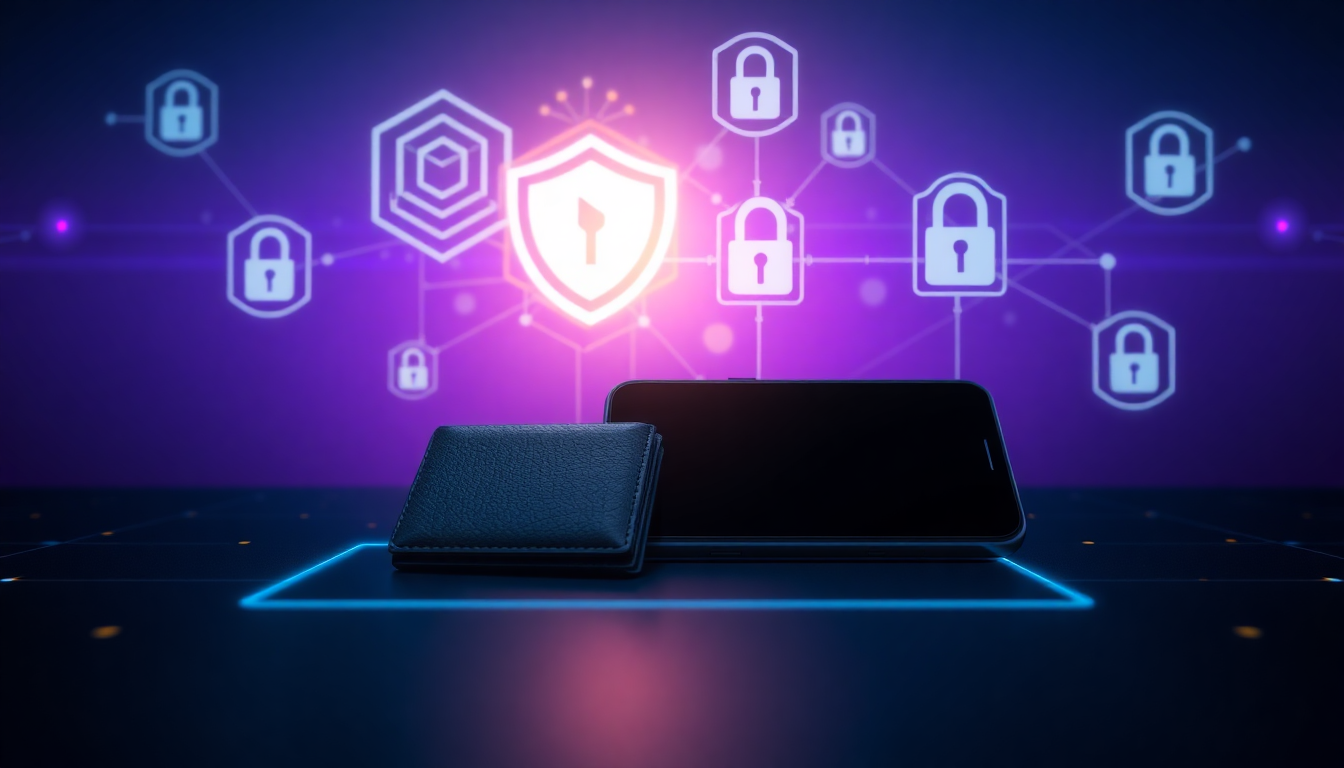
A cold wallet stores your private keys offline on a physical device, while a hot wallet keeps them on your phone or browser, connected to the Internet.
Cold wallets (hardware wallets)
Cold wallets like Ledger, Trezor or Tangem keep your private keys isolated from the Internet. In practice, even if your computer is compromised, a hacker cannot access your funds because transaction signing happens directly on the physical device.
Pros: maximum security, malware immunity, ideal for long-term storage.
Cons: purchase cost ($55-300), less convenient for frequent transactions, risk of physical loss.
Hot wallets (software wallets)
Hot wallets like MetaMask, Phantom or Trust Wallet are mobile apps or browser extensions. They offer instant access to your crypto and the DeFi ecosystem.
Pros: free, convenient, direct access to dApps, fast transactions.
Cons: vulnerable to attacks (phishing, malware), keys stored on a connected device.
The expert recommendation
The optimal strategy in 2026: a hot wallet for daily use (small amounts, DeFi, purchases) and a cold wallet for long-term storage (large amounts, savings). It’s the equivalent of having a checking account and a bank safe.
🔐 Cold Wallet vs Hot Wallet
Two approaches, two security levels
Cold Wallet
Hot Wallet
Top 10 crypto wallets compared — 2026
Here is our in-depth analysis of the 10 most relevant crypto wallets in 2026, sorted by category. Each wallet was evaluated on five criteria: security, ease of use, supported chains, DeFi features and value for money.
1. Ledger (Nano X / Nano S Plus / Stax)
Ledger is the French reference in cold wallets. Founded in 2014 in Paris, the company has sold over 7 million devices. The Ledger Nano X remains the most popular model with Bluetooth connectivity and support for over 5,500 cryptocurrencies via Ledger Live.
Strengths: certified secure chip (CC EAL5+), complete Ledger Live ecosystem (staking, swap, buy), French company.
Weaknesses: customer data leak incident in 2020, Ledger Recover (cloud recovery option) caused controversy in 2023, high price (Stax at $299).
Price: Nano S Plus $79 / Nano X $149 / Stax $299
Best for: long-term investors who want maximum security.
2. Trezor (Safe 5 / Safe 7)
Trezor, created by SatoshiLabs, pioneered hardware wallets (first model in 2014). The Trezor Safe 7, released late 2025, features quantum-ready security, Bluetooth and a high-resolution screen.
Strengths: 100% open-source (unlike Ledger), intuitive interface, new Safe 7 with Qi2 wireless charging.
Weaknesses: fewer supported cryptos than Ledger (~1,800), no native Solana support on older models.
Price: Safe 5 from $69 / Safe 7 from $179
Best for: users who prioritize open-source code and transparency.
3. Tangem
Tangem disrupts the market with an original concept: a cold wallet in credit card format with NFC chip. No screen, no battery — you sign transactions by tapping the card on your phone. And crucially: no seed phrase. Backup is done via backup cards.
Strengths: ultra-compact card format, no seed phrase (backup cards), aggressive pricing, water and shock resistant.
Weaknesses: requires an NFC smartphone, no screen to verify transactions on-device.
Price: from $54.90 (3-card pack)
Best for: those who find traditional hardware wallets too complex.
4. MetaMask
MetaMask is the world’s most used wallet for interacting with DeFi on Ethereum and EVM networks. With over 30 million active users, it’s the de facto standard for dApps.
Strengths: universal compatibility with EVM dApps, browser extension + mobile, massive community.
Weaknesses: 1.5/5 Trustpilot rating, technical and intimidating interface for beginners, only supports EVM chains (no Bitcoin, no native Solana), high swap fees (0.875%).
Price: free
Best for: experienced DeFi users on Ethereum and L2s.
5. Phantom
Phantom established itself as the reference wallet for the Solana ecosystem before expanding to Ethereum, Polygon and Bitcoin. With 15 million monthly active users and a $3 billion valuation, it’s the wallet success story of 2025.
Strengths: UX recognized as the best in the market, multi-chain (Solana + EVM + Bitcoin), malicious transaction detection, built-in staking.
Weaknesses: controversial swap fees (0.85%, up to 1.5% on mobile — over $30M in revenue), 2025 security incident (unencrypted keys in memory), browser extension required for dApps.
Price: free
Best for: Solana ecosystem users and multi-chain power users.
6. Trust Wallet
Trust Wallet is the world’s most downloaded mobile wallet (200+ million downloads), originally created by Binance. It supports over 100 blockchains and 10 million tokens.
Strengths: most multi-chain wallet on the market, built-in dApp browser, native staking, large community.
Weaknesses: browser extension vulnerability in late 2024 ($6M estimated losses), dated UX on some features, Binance association (perceived as centralized).
Price: free
Best for: those who want a single wallet for maximum blockchains.
7. Rabby Wallet
Rabby, developed by the DeBank team, is the rising wallet of 2025-2026. With 4.2 million users and nearly $15M in annualized revenue, it positions itself as the “smart” alternative to MetaMask.
Strengths: pre-signature with transaction simulation (you see the result before signing), automatic chain detection, lowest swap fees (0.25%), complete DeFi dashboard.
Weaknesses: relatively new (less tested than MetaMask), primarily desktop (mobile in development), no Bitcoin or Solana support.
Price: free
Best for: DeFi users who want more security and transparency than MetaMask.
8. ZenGo
ZenGo pioneered seedless wallets using MPC (Multi-Party Computation) technology. Your private key is split into two shares — one on your device, one on ZenGo’s servers — and neither alone is enough to access your funds.
Strengths: no seed phrase (biometric recovery), very simple interface, built-in crypto purchases (card, bank transfer), 380+ crypto support.
Weaknesses: best security features are paid (ZenGo Pro), sometimes slow transfers, no browser extension for dApps.
Price: free (Pro at $19.99/month)
Best for: beginners who want a simple wallet without seed phrase pressure.
9. Coinbase Wallet
Coinbase Wallet is Coinbase’s non-custodial wallet, separate from the exchange. It allows access to dApps and DeFi while keeping control of your private keys.
Strengths: integration with Coinbase exchange (easy transfers), clean interface, multi-chain support (Ethereum, Solana, Bitcoin), ENS identifiers.
Weaknesses: “centralized” perception due to Coinbase association, hot wallet so vulnerable, no insurance on self-custody funds.
Price: free
Best for: Coinbase users who want to transition to self-custody gradually.
10. Fibo
Fibo is a French next-generation mobile wallet that combines self-custody with a neobank-inspired user experience. Built on account abstraction (ERC-4337), it uses passkeys (Face ID / fingerprint) instead of seed phrases and sponsors gas fees for its users.
Strengths: no seed phrase (passkeys + Google/Apple recovery), zero gas fees (sponsored), Revolut-like interface, multi-chain (Bitcoin, Ethereum, Solana, Arbitrum, Polygon, Base), built-in euro purchases, French company registered as PSAN with the AMF.
Weaknesses: new to market (less track record), no browser extension yet (desktop dApp connection via WalletConnect).
Price: free
Best for: beginners and investors who want exchange simplicity with self-custody security.
Quick comparison table
⭐ Wallet Scorecard 2026
Rated out of 5 — our assessment on key criteria
| Wallet | Security | Ease of Use | Multi-chain | DeFi | Fees |
|---|---|---|---|---|---|
| 🧊 Ledger | 5/5 | 3/5 | 5/5 | 3/5 | 3/5 |
| 🧊 Trezor | 5/5 | 3/5 | 4/5 | 3/5 | 3/5 |
| 🧊 Tangem | 4/5 | 5/5 | 5/5 | 3/5 | 4/5 |
| 🔥 MetaMask | 3/5 | 2/5 | 2/5 | 5/5 | 2/5 |
| 🔥 Phantom | 4/5 | 5/5 | 4/5 | 5/5 | 2/5 |
| 🔥 Trust Wallet | 3/5 | 4/5 | 5/5 | 4/5 | 3/5 |
| 🔥 Rabby | 5/5 | 4/5 | 2/5 | 5/5 | 5/5 |
| 🔥 ZenGo | 4/5 | 5/5 | 3/5 | 2/5 | 3/5 |
| 🔥 Coinbase W. | 3/5 | 4/5 | 4/5 | 4/5 | 3/5 |
| 🔥 Fibo | 4/5 | 5/5 | 3/5 | 3/5 | 5/5 |
Assessment by Fibo Crypto — March 2026
| Wallet | Type | Seed phrase | Chains | Swap fees | Price |
|---|---|---|---|---|---|
| Ledger | Cold | Yes (24 words) | 5,500+ | Variable | $79-299 |
| Trezor | Cold | Yes (12/24 words) | 1,800+ | Variable | $69-179 |
| Tangem | Cold (card) | No (card backup) | 6,000+ | Variable | $55 |
| MetaMask | Hot | Yes (12 words) | EVM only | 0.875% | Free |
| Phantom | Hot | Yes (12 words) | SOL + EVM + BTC | 0.85-1.5% | Free |
| Trust Wallet | Hot | Yes (12 words) | 100+ | Variable | Free |
| Rabby | Hot | Yes (12 words) | EVM only | 0.25% | Free |
| ZenGo | Hot | No (MPC) | 380+ | Variable | Free / Pro $20/m |
| Coinbase Wallet | Hot | Yes (12 words) | Multi | Variable | Free |
| Fibo | Hot | No (passkeys) | 6 (BTC, ETH, SOL…) | Sponsored | Free |
Which wallet for your profile?
The best crypto wallet doesn’t exist — the best wallet for your use case does. Here are our recommendations by user profile.
You’re new to crypto
If you’re buying your first crypto, the priority is simplicity and hassle-free security. Avoid MetaMask (too technical) and hardware wallets (unnecessary complexity at first).
Our picks: ZenGo (no seed phrase, simple interface) or Fibo (passkeys, built-in euro purchases, zero gas fees). If you’re in France, Fibo has the advantage of being PSAN-registered with the AMF.
You invest regularly (DCA, crypto savings)
For a regular investor doing monthly DCA who wants to track their portfolio, you need a wallet with good portfolio tracking and integrated fiat on-ramp.
Our picks: Fibo (neobank-style portfolio tracking + euro purchases) or Coinbase Wallet (if you already use Coinbase). For long-term storage of large amounts: complement with a Ledger Nano X.
You actively use DeFi
If you’re yield farming, doing frequent swaps or interacting with dApps, you need a fast wallet with strong DeFi support.
Our picks: Rabby (pre-sign simulation, lowest fees) for the EVM ecosystem, Phantom for Solana. For large DeFi amounts: sign with a Ledger connected to MetaMask or Rabby.
You’re storing significant wealth
Beyond a few thousand dollars, a hardware wallet becomes essential. The golden rule: only keep on a hot wallet what you can afford to lose.
Our picks: Ledger Nano X (most complete) or Trezor Safe 7 (most transparent, open-source). Tangem if you want a compact format without seed phrase.
🎯 Which wallet for your profile?
Find the right wallet in 30 seconds
Essential criteria for choosing a crypto wallet
To make an informed choice, evaluate each wallet on these five fundamental criteria.
Security
This is criterion #1. Check: is the wallet non-custodial (you control your keys)? Have there been security incidents? Is the code open-source and audited? What phishing protections are in place?
In 2025, crypto hack losses reached $17 billion — and the majority came from social engineering (phishing), not code vulnerabilities. Wallets with transaction simulation (Rabby, Phantom) or biometric verification (Fibo, ZenGo) offer an additional layer of protection.
Ease of use
A wallet that’s too complex is a dangerous wallet — user errors are the #1 cause of fund loss in self-custody. Evaluate: is onboarding simple? Are transactions intuitive? Is the portfolio readable?
Supported blockchains
If you only hold Bitcoin and Ethereum, almost any wallet will do. But if you want to explore Solana, L2s (Arbitrum, Base) or specific ecosystems, check compatibility.
Fees
Watch out for hidden fees. Some “free” wallets monetize through swaps: MetaMask takes 0.875%, Phantom up to 1.5% on mobile. Conversely, Rabby only takes 0.25% and Fibo sponsors gas fees. Over a year of active use, the difference can reach several hundred dollars.
Regulatory compliance
With MiCA coming into full effect in Europe (July 1, 2026), non-compliant wallets may be restricted in the EU. In France, check if the wallet or its parent company is registered as PSAN with the AMF. It’s a guarantee of legitimacy and compliance.
Crypto wallet trends in 2026
The wallet market is evolving rapidly. Here are the four trends redefining user experience in 2026.
The end of the seed phrase
The 12 or 24-word seed phrase has long been the security standard for wallets. But it’s also the #1 cause of permanent fund loss: an estimated 20% of all Bitcoin is forever lost in inaccessible wallets. In 2026, alternatives are going mainstream: MPC (ZenGo), biometric passkeys (Fibo), NFC card backup (Tangem) or social recovery.
Account abstraction (ERC-4337)
Account abstraction transforms wallets into programmable “smart accounts.” Result: gasless transactions, flexible account recovery, spending limits, batch signatures. Over 25 million smart accounts already exist. It’s the technical building block enabling next-gen wallets to offer UX comparable to banking apps.
Unified multi-chain
The era of needing a different wallet per blockchain is ending. Users want to see all their assets (Bitcoin, Ethereum, Solana, L2s…) in a single interface. Phantom, Trust Wallet and Fibo are leading this trend.
Built-in fiat purchases
Wallets are becoming direct entry points to crypto, bypassing exchanges. Integration of services like Transak, MoonPay or Ramp enables buying crypto directly by card or bank transfer from the wallet. This is a major shift for mainstream adoption.
📚 Glossary
- Self-custody : holding your own private keys, without intermediaries. “Not your keys, not your coins.”
- Private key : secret code that allows you to sign transactions and prove ownership of your crypto. Must never be shared.
- Seed phrase : a sequence of 12 or 24 words that allows you to restore a wallet. The ultimate password for your portfolio.
- Non-custodial : a type of wallet where only the user controls their private keys. Neither the wallet developer nor any third party can access funds.
- DeFi : Decentralized Finance — a set of financial services (lending, exchange, savings) operating on blockchain without banking intermediaries.
- dApps : decentralized applications running on a blockchain. Examples: Uniswap (exchange), Aave (lending), OpenSea (NFTs).
- DCA : Dollar Cost Averaging — a strategy of investing a fixed amount at regular intervals to average out the purchase price.
- Account abstraction : technology (ERC-4337) that transforms wallets into programmable accounts, enabling advanced features like gasless transactions or social recovery.
- MPC : Multi-Party Computation — a cryptographic technique that splits a private key into multiple shares, each insufficient alone to access funds.
- MiCA : Markets in Crypto-Assets — European regulation governing crypto-asset markets, coming into full effect July 1, 2026.
Frequently Asked Questions
What is the most secure crypto wallet in 2026?
For maximum security, a cold wallet like the Ledger Nano X or Trezor Safe 7 remains the gold standard. Your private keys never leave the physical device. Among hot wallets, ZenGo and Fibo stand out for eliminating seed phrases, which removes the risk of losing or having them stolen. Rabby offers the best protection with its pre-signature transaction simulation.
Is MetaMask still recommended in 2026?
MetaMask remains the standard for interacting with Ethereum dApps, but it’s showing its limits: complex interface, no native Bitcoin/Solana support, high swap fees (0.875%) and a 1.5/5 Trustpilot rating. Alternatives like Rabby (better DeFi security), Phantom (better multi-chain UX) or Fibo (best simplicity) are worth considering depending on your profile.
Can you use a crypto wallet without a seed phrase?
Yes, several wallets in 2026 work without seed phrases. ZenGo uses MPC (your key is split into two shares), Tangem uses NFC backup cards, and Fibo uses biometric passkeys with Google or Apple recovery. These technologies are considered equally secure — or even more secure — than traditional seed phrases, as they eliminate the risk of paper loss or physical theft.
How much does a crypto wallet cost?
Hot wallets (MetaMask, Phantom, Trust Wallet, Rabby, Fibo) are free. Cold wallets cost between $55 (Tangem) and $299 (Ledger Stax). Watch for hidden fees: “free” wallets often monetize through swaps. MetaMask takes 0.875% per swap, Phantom 0.85-1.5%. Rabby is cheapest at 0.25%, and Fibo sponsors gas fees.
Do I need a different wallet for each crypto?
No, that’s no longer necessary in 2026. Most modern wallets are multi-chain: Phantom supports Solana, Ethereum and Bitcoin, Trust Wallet covers 100+ blockchains, and Fibo handles 6 chains (Bitcoin, Ethereum, Solana, Arbitrum, Polygon, Base). Only MetaMask remains limited to EVM chains (no native Bitcoin or Solana).
What happens if I lose my phone with my wallet?
With a traditional wallet (MetaMask, Phantom, Trust Wallet), you need your seed phrase to restore your wallet on a new device. If you’ve lost the seed phrase, your funds are permanently inaccessible. With seedless wallets, it’s simpler: ZenGo uses facial recognition, Fibo allows recovery via your Google or Apple account, and Tangem gives you physical backup cards.
📰 Sources
This article is based on the following sources:
- CoinLaw — Cryptocurrency Wallet Adoption Statistics 2026
- CoinLaw — Phantom Wallet Statistics 2026
- Bitcoin Magazine — A Seed Phrase Isn’t Self Custody, It’s A Liability
- CoinDesk — Crypto Hacks Hit $17 Billion in 2025
- Hacken — ERC-4337 Account Abstraction Guide
- AMF — MiCA Transition for PSANs
Comment citer cet article : Fibo Crypto. (2026). Best Crypto Wallets 2026: Complete Comparison Guide. Consulté le 17 March 2026 sur https://fibo-crypto.fr/en/blog/best-crypto-wallets-2026-comparison-guide